


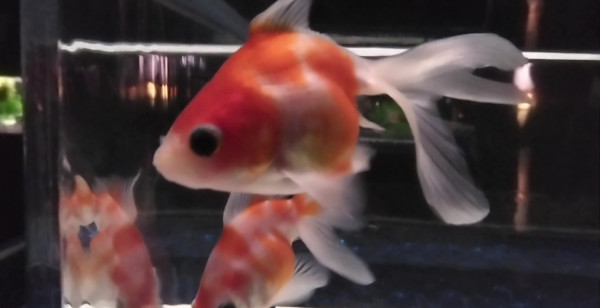
高校の友人との集まりで東京に出ることになった。折角なのでその前に何か訪れたいと考えネットで検索していると、偶然、銀座三越の新館にある”アートアクアリウムGINZA”にて、金魚と花をコラボレーションした面白い展示「藤と紫陽花 初夏きんぎょ」があると知った。足を運んでみることにした。
I was heading to Tokyo for a get-together with my high school friends. Thinking I'd like to visit somewhere before the gather, I searched online and happened to discover an intriguing exhibition at "Art Aquarium GINZA" in the Ginza Mitsukoshi New Building—a collaboration between goldfish and flowers titled "Wisteria and Hydrangea: Early Summer Goldfish." I decided to go and check it out.
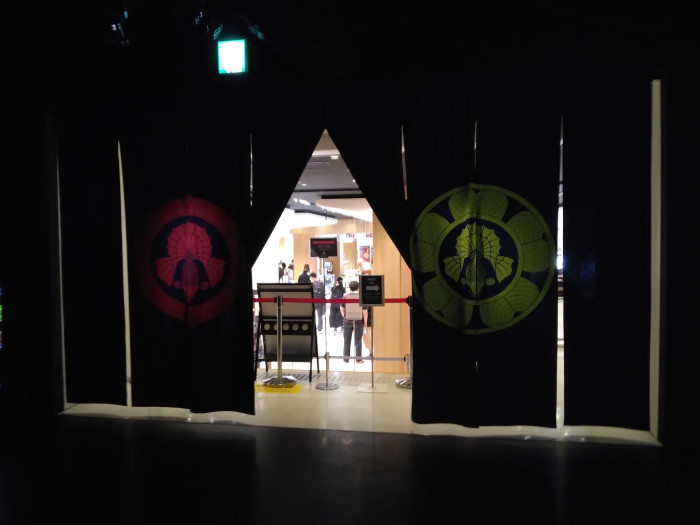
展示空間は広大で幾つものブースに分かれており、多様な形で金魚の妖美を紹介していた。The exhibition space was vast and divided into numerous booths, showcasing
the bewitching beauty of goldfish in a variety of ways.
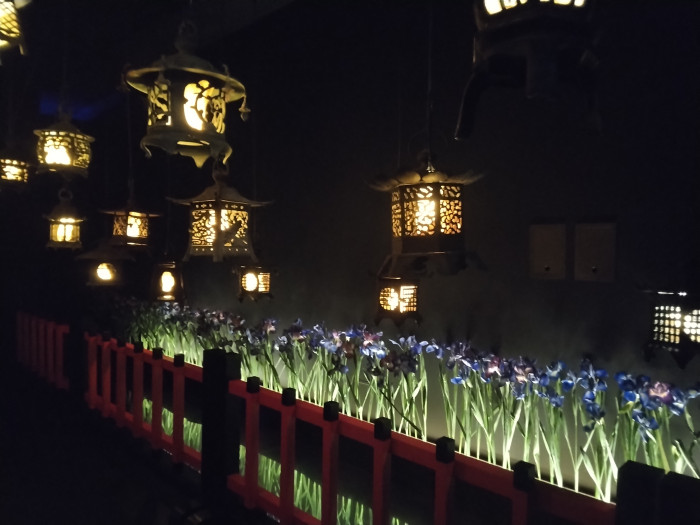
入り口を通過すると、暗がりの狭い部屋に導かれる。天井からは無数の古めかしいランプが下がり、通路沿いには鮮やかに照らされたショウブの花が並んでいる。まだ、金魚はいない。この先に待つ、古き時代へのタイム・スリップを思わせるような演出である。Upon passing through the entrance, visitors were led into a narrow, dimly lit
room. Countless antique-style lamps hung from the ceiling, while brightly
illuminated iris flowers lined along the passageway. There are no goldfish yet;
the setting evoked the feeling of slipping back in time to a bygone era that
awaited just ahead.
まず最初の空間”金魚の回廊”ブースでは、寺社建築によくある真っ直ぐな回廊の両側に、無数の円柱が並んでいる。その中を種類別に金魚が泳いでいる。何色にも移ろう照明が円柱内を照らしており、金魚の体色もそれに連れて変幻しているように見える。円柱の立っている部分の床は鏡なのだろうか。円柱が床下まで長く伸びているような錯覚に陥いってしまう不思議な空間であった。In the first area, the "Goldfish Corridor" booth, countless cylindrical columns
lined both sides of a straight corridor which often found in traditional temple or
shrine architecture. Goldfish swam within these columns, grouped by species.
Lighting that shifts through a spectrum of colors illuminated the interiors of the
cylinder, and the goldfish's body color seemed to change along with it. Was the
floor where the cylinder stood a mirror? It was a mysterious space that created
the illusion of the column extending deep down beneath the floor.
ガラスの金魚鉢で飼うのが一般的なイメージだが、まだガラスの鉢がない時代は焼き物の盆などで飼っていた。その頃は金魚を上から鑑賞していたため、「金魚は上見」との言葉がある。現在の品評会の審査でも、「上見」を評価するそうである。
While goldfish are generally imagined as being kept in glass bowls, in the days before glass bowls existed, they were kept in ceramic trays or similar containers. Back then, people viewed goldfish from above, which is why the
saying "goldfish should be viewed from above" still exists today. So, at current
competitions, "viewing from above" is also evaluated.
”久谷金魚品評”ブースでは、有名な九谷焼の陶器の中を遊泳しており、昔ながらの「上見」を堪能できる。質素な陶器の色が、金魚の美しい体色を引き立てているのが絶妙であった。
At the "Kutani Goldfish Exhibition" booth, you can watch goldfish swimming inside famous Kutani ware vessels and fully appreciate the traditional ”uwami” (viewing from above) style. The color of the simple pottery exquisitely set off the beautiful hues of the goldfish.
昔ながらの日本家屋には、所々に障子が設置され、空間や役割を分けている。明るい照明に照らされた障子の下に巨大な水槽が創られ、広いその空間を金魚が優雅に泳いでいた。
In traditional Japanese houses, ”shoji” (paper sliding screens) are installed here and there to separate or connect one wide space and its functions. A massive aquarium had been created beneath ”shoji” screens bathed in bright light, and
goldfish swam gracefully through the spacious area.
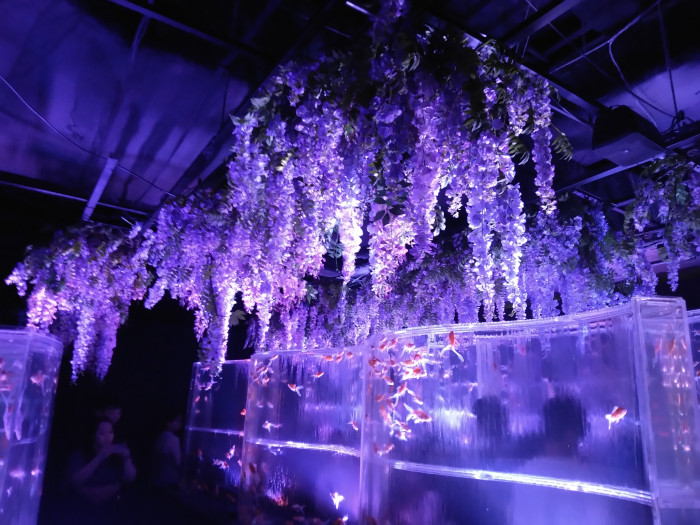
その向かいの広い”金魚の滝”ブースでは、天井から藤の花が垂れている。花の下には横長の巨大な水槽が奥まで幾重にも並んでいる。水槽の手前の面には水が流れ落ちており、これが滝をイメージしているとのことである。層の狭間を周遊し、何層もの金魚も楽しむことができる設定になっていた。
In the spacious "Goldfish Waterfall" booth opposite, wisteria flowers hung from the ceiling. Beneath the flowers, rows of massive, elongated water tanks
stretched deep into the space. Water flew down the front wall of the tank, which was said to be meant to resemble a waterfall. The layout was designed to allow visitors to wander through the spaces between the layers and enjoy the goldfish across multiple rows.
(動画・非公開「藤の花や紫陽花と金魚」、写真がメイン)
(動画・非公開「藤の花や紫陽花と金魚」、写真がメイン)
壁に穿った幾つものそれぞれの穴に日本の伝統的遊具、手毬を模した丸い金魚鉢が設置されているのは、”手毬リウム”ブースである。鉢の周囲には、多彩な模様を象った糸が架かっており、その模様の中を多種の金魚が遊泳していた。18個の手毬風金魚鉢が壁一面に設置されていた。
The "Temari-rium" booth features round goldfish bowls—modeled after ”temari” (traditional Japanese handball toys)—installed in various individual holes
The "Temari-rium" booth features round goldfish bowls—modeled after ”temari” (traditional Japanese handball toys)—installed in various individual holes
carved into the wall. Threads forming a variety of patterns were strung around
the bowl, and various kinds of goldfish swam amidst those designs. A total of
eighteen *temari*-style goldfish bowls are mounted across the entire wall.


